When Anger Gets Stuck: One Man’s Story Of Transformation

When anger gets stuckJohn* was a likeable, and successful lawyer in his late thirties who studied photography on the side. As he sat across from me in the chair in my office he spoke quickly as though in a hurry, yet his eyes were tired, his skin thin and faded. His body appeared hunched over on itself as he propped his head up on the arm of the sofa in my office. He came to me because of an anger problem and sleep disorder that was “messing up” his life.

Though he had admittedly always tended to hold a grudge, his anger quickly got out of hand when his serious girlfriend of four years left him to be with his best friend.  That was two years ago. Though he had thought that he had gotten over it, the anger flared up once again when he found out through a mutual friend that they had become engaged. That’s when the sleep problems started.

The Vicious Cycle

No matter how much he tried to calm himself and get a good sleep, he could not. During the day he would do just fine. There was enough going on at work that he could put his mind on other things, and almost forget about it for a while. But the thoughts and rage seems to flare up again as soon as his head hit the pillow. The next day at work he was tired and irritable. Even the littlest thing would set him off. It was to the point that it was starting to affect his work performance.

John did not want to be so tired and angry all the time, but he felt powerless to do anything about. He was caught in a vicious cycle and needed out quick. Not only was he angry at others but he was angry at himself. How could he have let things get this bad?

Mind Trap

He felted betrayed by the two people in his life he thought he could trust and was plagued by violent fantasies almost daily. The fantasies frightened him and contributed to his poor sleep which set of a vicious cycle of dependence on sleep medication and alcohol in order to “calm down and get to sleep”.

He wanted out of his own mind. Or at the very least not to be plagued by violent fantasies. He wanted to know if I could offer him some techniques to manage his anger and also to get a good night sleep.

Mind Trap: The roots of anger

The Roots of Anger

Suspecting that anger had been a problem for him long before the issue with his Ex, I asked some questions about his history. I wanted to know if anger was a problem for him in other areas of his life. How had he been managing up until now? Did other family members also struggle with this issue?  He described his father as a “rageaholic” that would often be verbally abusive. This was disheartening but also not a surprise. There has been a fair amount of researching documenting the negative affects of parental verbal abuse on children’s brains. Also, a strong connection often exists between excessive anger and  depression. This is especially true for men. So much so, that some people actually don’t make a distinction between the two. The affects of both anger and depression can also have a long lasting impact on families for generations.

In his own family, john was clear he did not want to follow in his father’s path.  As a teenager, he  had watched his father, a successful business owner, lose everything to a combination of rage and alcohol. He was terrified that he too was on this same trajectory. It turns out that anger had also cost John a job and was the main reason for his self-employed now. An avid Kick boxer,  he had successfully channel this anger into his sport  for a period of time. But now he wondered if it was actually making things worse. Also, as he got busier attending kickboxing classes was less of an option.

Taking The Edge Off

I also evaluated his strengths: He had a good relationship with his mother and felt that this was a relationship he could trust. He also had begun to practice a mindfulness based mediation practice that had helped him “take the edge off” from work stresses. We evaluated his sleep medication use together and determined that it was actually a helpful support right now in order to get the sleep that he needed to be less reactive and this was being monitored by his doctor. We both agreed that getting good sleep was an essential part of anger management. And once the pattern had shifted for him, tapering off the sleep medication would be a secondary goal.

What is healthy aggression?

My initial goal with his was to help him understand the difference between healthy and unhealthy aggression. I made it clear: our goal was not to get rid of anger: that would be impossible. Anger is one of the five basic emotions wired into us. We can’t help but get angry from time to time. What he needed was not to “manage” his anger to try to control or stop it, but rather to transform it. Before he can transform anger he first recognize the difference between anger that’s unhealthy and the healthy kind. A lot of people get confused about anger. They thing all anger is the same. And it’s all bad. But it’s not.

Heathy vs Unhealthy Anger

Anger gets such a bad rap, most people can’t tell the difference between the healthy and unhealthy kind.

From Thought to Action: A Bottoms up Approach

Traditional approaches of working with anger often involve cognitive interventions. This can be helpful. However, for many people, cognitive interventions along are not enough. That’s because when we are truly angry, our cognitive abilities actually go offline. It’s seems our brain is wired to have a physical response immediately, before the slower moving rational part of our brain even has a chance to kick-in. This is why a body-based (often called “Bottoms Up“) approach is often helpful when it it comes to dealing with states of stress. Including traumatic stress states such as anger and rage.

Letting the Body Be the Guide

Once john understood the difference between healthy vs unhealthy anger, at least intellectually it was time to learn how to access the healthy kind. He had to learn how to embody it. Many approaches focus on going for the jugular. The idea is to leap right into the fire pit of anger and expose your self to it, but use mental tools try to think or see it differently. In my experience, while these kind of experiences can be catharsis, they are often short lived. For this reason, I held off on doing any kind of trauma work initially. Instead, we let his body be the guide.

I knew that John was trapped in a paradigm of unhealthy aggression that touched everything. It seeped into his view of himself and the world, and also how he experienced these relationships. As he walked around my office I noticed how this paradigm played out in his physiology. He had a stiffness and rigidity in some parts of his body, yet other parts were collapsed and disconnected from the whole. I knew that if we started to connect these parts one by one, he would start to experience himself differently. He would began to not only feel different, he would actually be different. He would embody, perhaps for the first time, a healthy side of himself that he did not know existed.

A Better Foundation

I have many toys and tools in my office. One of them is called the Smovey Ring. A ring shaped tool filled with ball bearing. I worked with John’s posture initially to help him establish a sense of support that was neither rigid nor collapsed. Then guided him to move the rings in a way that established a rhythmical pattern. John laughed initially at the ridiculousness of it. He was expected to do “serious work” and to “confront his demons”, but this felt more like play.

I assured him that we would be addressing his demons, but in order to do that he needed a better foundation. Without that foundation, I predicted, he would end up in the same place, once stress got high enough. He agreed and was game. When he got good at this we added some sounds. Initially a low open sound that he held out for a length of time and then we added some other sounds to stimulate different parts of his nervous system.A New Dance-Dance of Change

A New Dance

It took several months of both play and hard work but eventually I noticed John start to hold himself differently. His movements were more integrated and smooth and his professional relationships were starting to change for the better. One day john shared with me that had successfully handled a conflict with a colleague. What normally would have “sent me over the edge” and resulted in more resentment, broken trust and an even larger problem, now was something all entirely different.

John had stood his ground and had successfully addressed his concerns, yet he had been able to do so with a flexible, open posture that invited more of a back and forth conversation. Unlike  the past, when john might have lashed out, or quickly shut down, he was  doing a different dance. He had learned the dance of healthy aggression. This changed everything for John. Both his relationships with himself and others felt different. They were sources of connection and possibility rather than loss, betrayal and disconnection.

Building Trust Over Time.

Of course there were times when the betrayal and old wounds still got triggered. John still had occasional nights of bad sleep, but he was less worried about them. He knew he could recover and find his balance again. He had earned a sense of basic trust with himself.  It was a trust that he could depend on more and more. This is what some people in the field of psychology call “healthy dependency”.

Once this healthy dependency grew, he realized he was ready to let go of the unhealthy kind of dependency. It was time to let go of his use of sleep medication and alcohol to sooth his nerves. After consulting with is doctor, he began to taper off both.  A new chapter of his life was beginning to unfolded so were new possibilities. He started dating again and eventually became serious with a woman with whom he felt a strong connection. Friendship with other people that he had abandoned in his “angry withdrawn phase” needed to be repaired. And thankfully now he had the energy to do it. Not everyone was receptive, but many were. Finally, the support they he most needed and wanted in life, was there. He was learning to trust others again, but more importantly he was learning to trust himself.

*The names and characteristics of the people in this story have been changed and some details have been altered to protect privacy and confidentiality. This story has been written with full permission and consent. Any characteristics or identifying information that appear to resemblance real people either in or outside of the therapy office of Danielle Kiesler, LMFT is strictly coincidental.

Do you have Anger or Depression?

Are you ready to get control of your anger?

Contact our office to make an appointment:

Give us a call at: (314) 827-5448 or email us at danielle@danceofchange.com

We offer in person sessions in our office in Saint Louis, MO in Webster Groves as well as video (Telehealth) session for anyone located in the state of Missouri

Unbreakable (a Poem)

Lake-Expressive Arts Therapy

Beneath the wounds, the armor and debris of childhood,
under the buzz and hum of your current life, bustling and urgent,
Beneath the deadlines and promises
lies a river,
Subtle and meandering, yet deep.
It weaves through the very fabric of your being, though you may have hardly noticed
Its cool glistening currents of blue gold and green
Undulate, and fold,
Rolling over all obstacles in its path, nourishing them at the same time.
It a surprise and delight to witness.
The air here is clean and wide
It stretches open, yawns and
Breaths with you.
Emptying and filling,
Emptying and filling again and again.
Until you feel both empty and full at the same time.
Over time this will feel like less of a contradiction.
Because you will have learned the secret of the yogis and the mystics:
What pervades you and everything is you.
You are intimately woven into the fabric of life.
It is possible to make deep contact with yourself and the world without getting lost.
You can’t be injured here. And it can’t be broken.
You are unbreakable.
It is unbreakable.
And the river flows on.

Interested in Poetry and Expressive Arts Counseling?

Contact our office to make an appointment:

Give us a call at: (314) 827-5448 or email us at danielle@danceofchange.com

We offer in person sessions in our office in Saint Louis, MO in Webster Groves as well as video (Telehealth) session for anyone located in the state of Missouri

Dancing with Anxiety: overcoming fear in four steps

Dancing with Anxiety
You can actually thrive and shift the grip hold that anxiety has on your life.

Often people come to my office asking me to help them “stop their anxiety”. They say that no matter what they DO, the anxiety keeps getting the best of them. That is certainly understandable. Anxiety that’s out of control can wreak havoc on our health and our sanity. But here’s the painful truth: you can’t stop fear or anxiety from happening, our brains and bodies are wired for it. What you can do is shift your relationship to it.

Shifting the dance:

Anxiety does not have to run your life. And you don’t have to work so hard to try and stop it.  You can actually thrive and shift the grip hold that anxiety has on your life. This is what I call dancing with anxiety. Like learning a  new dance, there are steps that you’ll need to learn. There is some practice involved. But mostly all that’s required is a little patience and a desire to do it differently. Let’s look at what this means.

Dancing with anxiety means…..
  • Befriending yourself and your body even when stress is high
  • Learning to shift your attention in ways that actually help you calm down vs just “manage” your symptoms.
  • Gently confronting anxiety, without making it worse or spiraling out of control
  • Shifting your perspective of your own anxiety to see it as the super power it really is.
  • Enjoying a life with less anxiety. Also, feeling confident that when anxiety does hit, you can handle it.

How anxiety works

Before we start doing that steps and start dancing with anxiety, first we have to understand the mechanism of fear. Let’s figure out why you are using anxiety in the first place.

Just like you can’t prevent a car crash from happening after it’s already occurred, you can’t prevent an anxiety attack after the fact. The good news is that anxiety is actually very predictable cycle. Anything you can predict you can actually change to some degree.

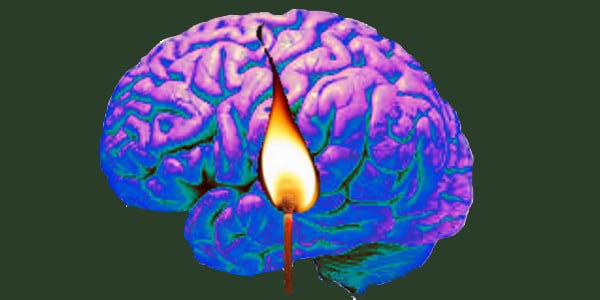
If anxiety is the match that eventually leads to a forest fire, we must first understand how that match gets lit.

Your brain on Stress and AnxietyYour brain on fear: Signs you are being hijacked by anxiety:
  • Narrow, tunneled vision
  • Mind in a frenzy: Rapid, negative, future-focused thinking “What if…”
  • Self-perception also becomes narrow and also negative focused.
  • Judgement and complaining about self and others increase “somethings wrong with me” or “something’s wrong with them”
  • Obsessive thinking about how it “should be” how we or another person should be behaving, performing, thinking.
  • Mental Repetition: Replaying the same dreadful scenario over and over again in our mind.
  • Over focus on “Doing” vs “Being”
  • Perception shifts from Perception of a self whose on her way somewhere, get to something
  • William James “ we leave in a perceptual frenzy, always thinking we should be doing something
The two kinds of Anxiety:

 Though anxiety comes in many flavors and variations, it can be boiled down into two main categories: specific anxiety and general anxiety. Specific anxiety I just as it sounds, the anxiety is usually focused on a specific target or triggered by a known set of circumstances. Specific anxiety can include Obsessive Compulsive Disorder (OCD), Specific phobias like agoraphobia and many others. General Anxiety does not have a specific known target or trigger and appears to be pervasive and chronic. Some people also refer to this as Existential Anxiety.  Some anxiety has its origins in deep trauma. Existential Anxiety does not. Existential Anxiety looks and feels like habitual stress.

Regardless of the type of anxiety you are suffering from there is a way to shift the dance.

When we begin to feel at home in our bodies and our minds, we can begin to interrupt that anxious part of us that wants to sound the alarm.

A New Approach to Dancing with Anxiety

There are some predictable steps we can take that will help shift the dance.
1. Start with the body.

Anxiety is primarily a lived and felt experience. That means your body is giving you important signals for you’re to pay attention. No matter what you are doing, start by taking a pause. Listen and feel what your body is trying to communicate to you. Is it tense or constricted in anyway? Are there places where this is less the case? Just by slowing down to notice our physical state can shift us out of the anxiety a bit. Stop and allow the dust to settle.

2. Create a Circle of Safety:

Often we don’t allow ourselves to enter our own experience because we have been taught it’s not safe. Part of stepping out of the grip of anxiety is letting ourselves know it is safe to feel now. Set an intention to step out of anxiety and befriend yourself. Once you befriend your body you might start noticing and befriending other parts of your experience: your thoughts, your emotions. Try to do this without judgement. If you need help with this you might imagined safe people, places or allies that represent safety and curiosity for you. You can also ask for help from a trusted friend or therapist.

3. Shore up on resources:

Once things feel safe enough on the inside and the outside we can look towards sources of creative and life inspiration to help heal. Anything that inspires us, opens us up and allows us to feel free can be used to transform our experience of anxiety. I call these resources. Often it’s a good idea to have a combination of resources to offset the effects of anxiety. Resources can be positive affirmations, soothing people, exercise, creative practice, spiritual practice, community, as well as a whole host of other things. In my work with people we often identify the specific resources that people are using already and which ones are most effective for them. We may also identify new ones that perhaps have been overlooked.

4. Add a Dab of what Frightens

You may be surprised to discover that things that frighten you and normally cause anxiety can actually strengthen you if used in the right way. Familiar anxiety “triggers” can be transformed into helpful reminders to change course. We can learn to choose a different path than the one our anxiety tends to follow. A racing heart can be transformed into a reassuring beat. A tightened jaw can soften and open.


Do you have anxiety?

Ready to  dance with it instead of let it run you?

Contact our office to make an appointment:

Give us a call at: (314) 827-5448 or email us at danielle@danceofchange.com

We offer in person sessions in our office in Saint Louis, MO in Webster Groves as well as video (Telehealth) session for anyone located in the state of Missouri

What to Expect in Premarital Counseling:

Premarital CounselingCongratulations! You have decided to invest in one of the most important aspects of your life: your relationship. According to a longitudinal Harvard study on aging the single most important factor to long-term health and happiness is not good genes, IQ, money, social status, career success, health, or number of relationships, but rather, the quality of our most intimate relationships.

By investing in your marriage now, and throughout your lives together you will be protecting yourself and your partner from life’s discontents, boosting each other’s mental as well as physical health and insuring long term happiness and satisfaction in life.

If this sounds like a tall order, it is. Many people are aware of the high divorce rate in the U.S., which is currently around 50%. Often, role models for a strong and healthy marriage are few and far between. The good news is that even if you or your partner had less than stellar examples of marriage growing up or in your friends circle, many of the skills and elements of a healthy marriage can be taught and learned at any point. The sooner the better!

How  Premarital Counseling can help you build a better marriage.

There are five steps to building a healthy marriage.

Let’s look at each one and what premarital counseling can do for your future together.

  1. Create a Vision Together in Premarital Counseling

One of the key tasks of premarital counseling is to increasing your clarity about the kind of life you want to build together. Many couples have not seriously considered this beyond the basics (Where to live, jobs, # of kids, etc.) and then end up with uncomfortable surprises later on down the road. But this will not be you! That is because many of these surprises can be avoided with a clear, and honest vision.

We will also look at the latest research findings, behaviors and practices that lead to a healthy marriage  vs. those that end in divorce or discontent ( yes, this has been researched) and what that means for your lives together.

  1. Identify Your Path (s)

In order to support this vision you will both get clear on the kind of partner you aspire to be in order to build the kind of life and relationship you want to create.

This involves looking at the relationship as a whole but also the individual strengths and contributions of each person.

We will also look at the long term trajectory of your relationship, the stages of a marriage and the tasks and goals of each stage. You will identify where you and your partner currently stand on your path as couple and what the tasks are of your current life stage. We will also identify the stage you will be heading towards next and what’s needed for success.

  1. Strengthening the Foundation: Communication and Resources

Next we will look at how you and your partner prefer to be loved. This includes love languages but also the “magic ratio” that your marriage needs to stay healthy on a daily basis. Naming your values, attitude and skills is also key. We will look at and practice the essential communication skills that all couples need to feel loved and appreciated. I will actively coach you and give you feedback so you know when you are on the right track. Good communication is much more difficult than most people think. Effective negotiation is even harder. The three most important qualities for effective communication are respect, openness and persistence. We will practice these together and also identify supports and strengths in your relationship (both internal and external). We’ll also look at potential barriers to good communication in your marriage and address them before they become a real problem.

Premarital Counseling

  1. The Zen of Relationships: Dealing with Conflict and Stress

Since stress is an inevitable part of both life and marriage, it’s important to look at how you and your partner’s unique stress physiology play out under stress. This is an element that most traditional couples therapist leave out, yet it is so important! We will look at how to tell when you and your partner are “going over threshold” and what they need from you in those moments. You will also get to know your own “threshold” and “window of tolerance” for handling stress and how to communicate with your partner at these critical times. This is important not only for trauma healing but also trauma prevention as a couple.

Marriage also comes with some built in contradictions (for example: speak up or keep the peace. And also, solutions, no matter how perfect often set the stage for new problems. Knowing this, we will look at how to embrace the paradox and also avoid the usual marriage traps (there are four of them). We look at how to use conflict to actually strengthen a relationship and the steps needed to make a good repair. Finally, we will practice the art of repair together.  This skill is so essential that it can actually save a marriage!

  1. Premarital Counseling helps you create a Resilient Marriage now and  in the  Future

A healthy marriage is like a healthy ecosystem. With the right combination of care and attention it becomes a life-giving place you can live and depend on for sustenance on a regular basis. In this last step we will review all the elements of healthy marriage, the skills you learned, and your commitments to yourself and each other.  We’ll address what it takes to keep your marital “ecosystem” healthy and sustain growth in the long run. Here is what you will need:

  • A vision of the life you want to build together and individually
  • The appropriate attitudes and skills to work as a team along this path
  • The motivation and ability to put the “magic ratio” into practice on a daily basis
  • The skills and motivation to persist and grow even in times of stress
  • Time to review progress, recharge and celebrate your lives together.
How to get the most out of Premarital Counseling:

The major aim of counseling is to increase your knowledge about yourself, your partner and the

patterns of interaction between you in order to create a strong foundation for your lives together. This requires some courage and emotional risk taking on both of your parts.  Counseling works best if you have more goals for yourself than for your partner or the relationship itself.

Unlike regular couples therapy where the focus is on fixing difficult problems, in premarital counseling the focus is on growth and prevention. We won’t be dredging up issues from your past and analyzing them. Rather, I work best when I help you reach objectives you set for yourself in the context of your relationship. A powerful approach to our time together is for each person to do the following before each session:

  1. Reflect on your objectives for marriage
  2. Think about your next step that supports or relates to your larger objectives for the kind of Marriage you wish to co-create, or the partner you aspire to become. Then, please share this with your partner at the beginning of our next session.
About to get Married? Need a Premarital counselor or Marriage and Family Therapist in Missouri?

Are you interested in starting marriage boot camp in order to lay the best foundation for your marriage?

Give us a call at : (314) 827-5448 or email us at Danielle@danceofchange.com

We offer in person sessions in our office in Saint Louis, MO in Webster Groves as well as video (Telehealth) session for anyone located in the state of Missouri

Book Recommendations on Healing Trauma

People often ask me for book recommendations on trauma. There are SO many great books out there on healing trauma right now.  So I’ve tried to narrow it down a bit  and divided them by category.

For those Just starting Somatic Therapy:

Why you can’t think your way out of Trauma. This article is a quick read and lays the case for the importance of using the body’s wisdom to heal trauma.

A great starter book and even comes with a CD of basic exercises that can be a nice compliment to therapy.

A classic and also a good starter book for understanding trauma and its impact on the nervous system.

For Parents & Kids:

I really like this simple and straight forward video for elementary school aged children by Gina Ross. It’s especially helpful in the aftermath of war violence or natural disaster .  Just scroll down to the bottom for the two videos. The original was made in Hebrew and the English version is dubbed but still quite helpful. My kid loves it and often quotes from it 🙂

For Therapists:

A great companion book for therapists and students going through the first year of the Somatic Experiencing Training Program.

A helpful look at how to heal developmental (early childhood) trauma from a somatic therapy perspective. Written by two senior therapists in the field of Somatic Psychology.

Many therapists love this primer on Steven Porge’s Polyvagal theory.  It lays the theoretical foundation for the Somatic Experiencing approach and many other therapies and somatic models today.

Yoga for the Eyes: 4 simple exercises to prevent pain and strain

Yoga for the Eyes
Yoga for the Eyes: moving the eyes in all six directions

As I’ve conducted more and therapy sessions online I’ve noticed increased somatic symptoms both in myself and others. Staring at a screen for long periods in not a natural behavior and puts an incredible amount of strain on your body, your brain. Over time it can  create screen fatigue in your entire system,  especially your eyes.

Eyes train can lead to migraines and a whole host of other problems. In addition to following best practices during screen time use, these four exercises from the yoga tradition can be helpful. I’ve put together some of these exercises in a picture format so you can just print out the picture and hang it near your computer. Again, the less screen time the better, and chances are you are reading this on screen right now. J I’ve also kept the exercise descriptions as short as possible. These can be done in any order, but if you are experiencing eye fatigue currently, it’s probably best to start with Palming.

  1. Palming

This is savasana for the eyes. To rest sore eyes immediately after a screen time binge, start by finding a comfortable positon either sitting or lying down and allow the eyes to close. Place your hands together in prayer position and rub them together vigorously to generate heat. Now cup your hands over your eyes and allow the heat and darkness to sooth a relax them.

Variation: If you tend to run hot and/or dry and heat is aggravating to you, place a cool, wet washcloth over your eyes and allow the coolness, darkness and moisture to do its work.

  1. Explore the Six Directions

If you’ve had a lot of screen time already, feel free to print this image and hang on your wall by your computer for a quick visual reminder.  If the eyes are already aggravated, you can do palming in between each direction to allow for both rest and integration.

  1. Look up for a few breaths, then down ( repeat 5x)
  2. Look to the far upper right hand corner; moving the eyes on a diagonal line look down to the lower left. Hold for a few breaths each ( repeat 5x)
  3. Look to the far upper left hand corner; moving the eyes on a diagonal look down to the lower right. Hold for a few breaths each ( repeat 5x)


  1. Eye Circles

Now we will put all six directions together. Start by looking up. Circle the eyes slowly by touching all six directions in one smooth connected circle. Switch directions and go counter clock-wise.


  1. Near and Far

Hold your thumb close to your face. Let your eyes focus on your thumb for a few seconds then find a point far away to focus. A window with a bit of a view is great for this exercise. Look as far away as you can for a few breaths. (Repeat 5x)

Further exploration on yoga for the eyes:  want more ? Check out these articles here, here and here.

Looking for a somatic therapist and yoga instructor who works online and can help with your particular situation? Check out our schedule for availability.

Finding an Anchor in the Midst Fear and Uncertainty

Finding an Anchor in the Midst Fear and Uncertainty

(7 Tips for Resilience during Times of Crisis)

Finding an Anchor in the Midst of Fear and Anxiety

In these challenging times of Covid-19, I wanted to reach out and offer some tips that I hope may be helpful for our nervous system settling and regulation.

1. Allow for intense and fluctuating emotions.

These are normal in response to a real danger that’s invisible and largely unknown. Whether it’s untethered fear that jumps around like a wiry nerve, bouts of intense angst or the tired beast of despair, we are all suffering right now. Forgive yourself and others for their behavior under stress. It is so human. And the more you can allow for it, the quicker it will settle and pass.

2. Join the herd.

Under threat animals instinctively know that there is safety in numbers and will stick with the pack for protection. You can use this instinct and still practice social distancing. Get outside and walk or run with others and keep the recommended six feet distance. Know that a healthy nervous system can have a positive impact on others from as far as 30 feet away.

3. Connect with others.

Hunker down with a pet, friend or family member. Who are the people or animals that have a calming or soothing effect on you? Reach out to them in as many creative ways as possible virtually or over the phone. Call an old friend. Start a virtual singing group. Know that you are not alone. We are all in this together. Even in social isolation we are together in our separateness.

4. Rectify a Routine.

Likely, your life as you know it has been completely disrupted, along with your schedule. Try to rectify some semblance of a routine and then stick to it as best you can daily. This will help ground you. Basic routines tend to divide the day into at least three parts: morning, afternoon and evening and then establish activities for each (breakfast, walking, checking emails.) Now, can also be a good time to Dive into a project and this could be a part of your routine too that can help ground you. If you have a home or creative project that you have been meaning to do, now is that time. Organize the closet. Tackle the drawer of old photos. Fix the broken fence. Mend the socks you wore through this winter. Likely, there is some part of your life that has been waiting for a moment like this one.

5. Feel your bones often and throughout the day.

Sometimes the best way to face an invisible threat and the corresponding fear of the unknown, is to touch what is known and has weight in your own life. If you are sitting, find your sitz bones now. Takes some time to feel their weight and allow your breath to settle. If your arms or legs are crossed take some time to notice the points of contact. Let yourself settle into those points a little. You might continue this practice by pushing a little into your hands and feet and also feeling your muscles. (If you practice yoga think: plank pose, down-ward dog, goddess pose, warriors I, II and II)

6. Protect your mind and attention.

Limit the amount of time you consume media, especially at night or when you first wake up. Set aside a specific time or times during the day for media consumption and then track your internal state immediately afterwards. Are you inspired to action? Angry and outraged? Spacey and numb?  Try to gently move this energy in creative ways and connect with others.  If you noticed yourself getting over-whelmed by media, either really anxious, angry up or feeling stymied and depressed, put limits on your device so that you can only access media during certain times of the day.

7. Remember your ancestors.

Likely you have or had a grandparent or great-grandparent that survived the Spanish Flu. Take some time to feel their resilience. Imagine what it was like for them the day they got the news that the flu was finally over. Just like them, you will get through this too.